
Safe, Durable Playground Turf Solutions for Central Coast Schools
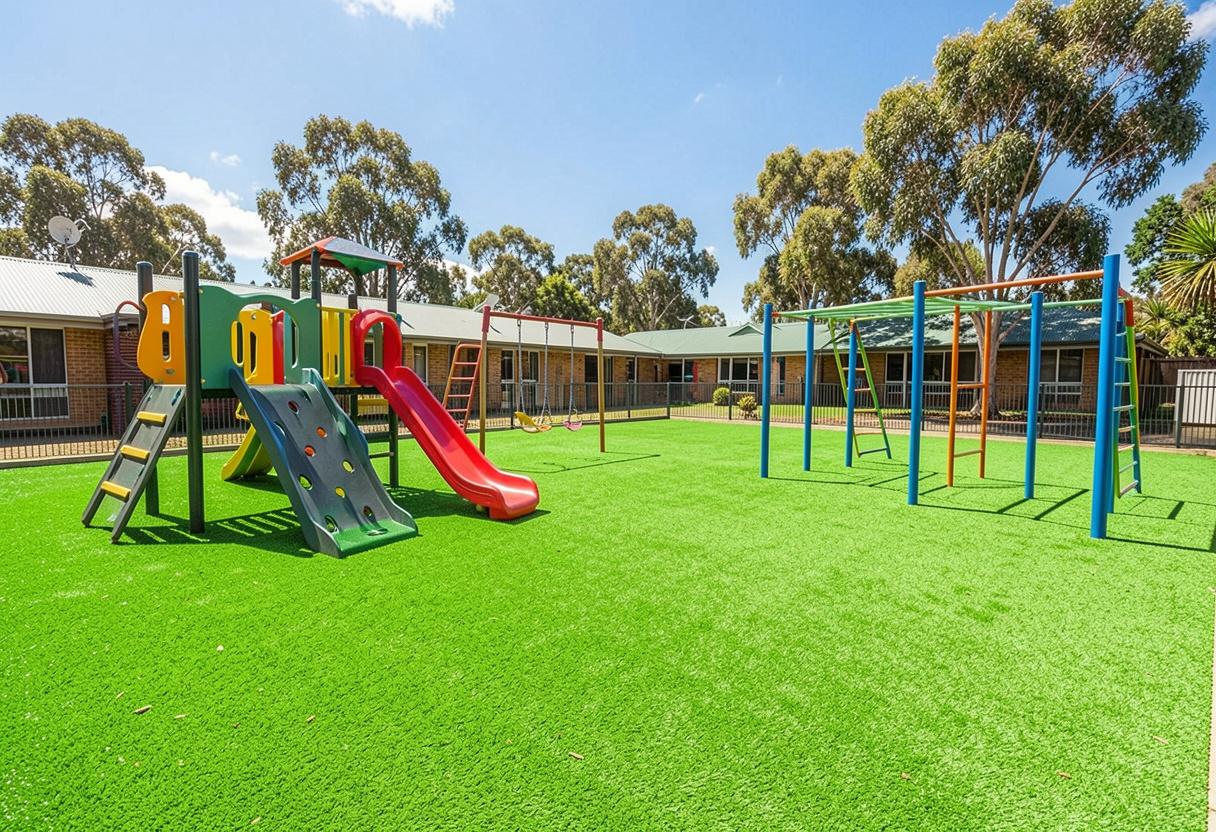
For School Playground Turf Central Coast schools depend on year after year, durability and safety can’t be compromises — they have to be built in from the start. Patchy lawns, muddy puddles after rain, and bare worn-out spots near play equipment are familiar sights at primary schools and early learning centres from Gosford to Wyong, and they cost time, money, and lost outdoor play days for kids who need them most.
Our team has spent years installing compliant synthetic playground surfaces for schools across the Central Coast, including Tuggerah, The Entrance, Terrigal, Umina Beach, Erina, Woy Woy, and the surrounding suburbs. We specify systems that meet Australian Standards, work alongside facilities teams and P&C committees, and deliver finished playgrounds engineered for the long haul. From safety compliance and soft fall ratings through to minimal-disruption installation, every project is handled end to end so principals and business managers can sign off with confidence.

Safety Compliance and Australian Standards
School playground turf has to meet Australian Standard AS 4422 for playground surfacing — there’s no shortcut around it. Compliance starts with the critical fall height (CFH) rating, which must match the highest accessible point of the play equipment installed on the surface. The right outcome is delivered through the correct combination of synthetic turf and engineered underpad, working together as a documented impact-attenuation system.
We specify compliant systems, not just supply rolls of turf. Every school playground installation is designed around the specific equipment heights on site, with the underpad and turf chosen to achieve the required CFH rating. Documentation is provided on completion to support school insurance, audits, and ongoing safety records.
Built for High-Traffic School Use
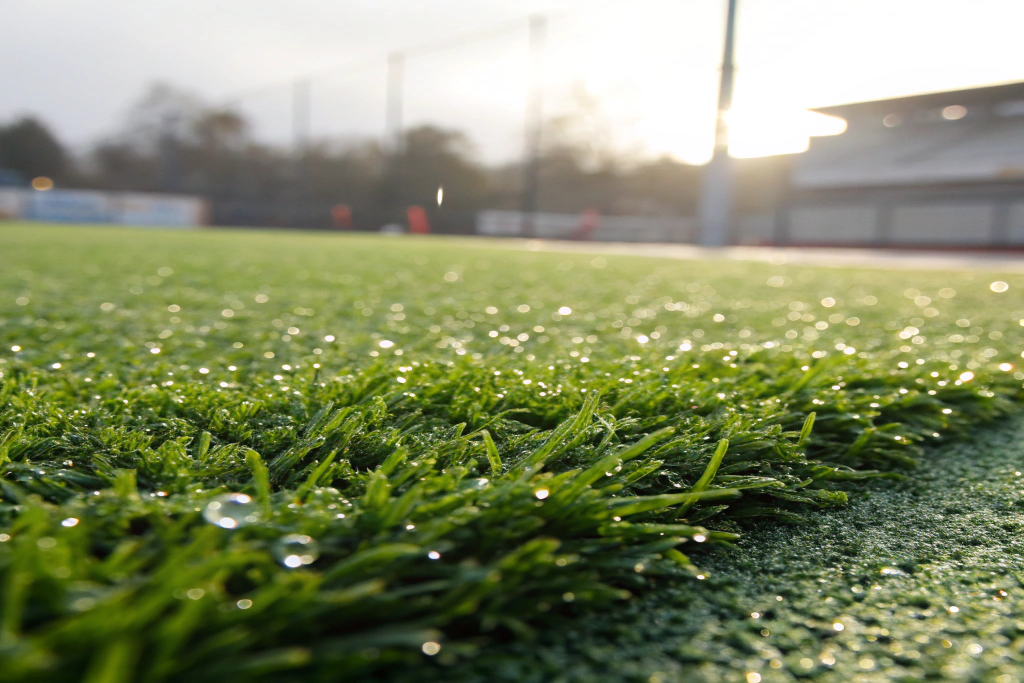
School playgrounds are among the most demanding surfaces in any category. Hundreds of students running, sliding, kicking, and pivoting on the same area every single day, across every season, for years on end — the wear load is unlike anything a residential or even commercial lawn ever sees.
School-grade synthetic turf is engineered specifically for that punishment. Dense pile construction holds its shape under sustained foot traffic, reinforced backing systems resist tearing and seam failure, and the compacted base preparation beneath the surface stops sinking, dipping, and uneven wear patterns from forming. The result is a playground surface that still looks and performs the same in year five as it did on day one — no patchy bald spots near the swings, no muddy slide-out zones at the bottom of slippery dips, no premature replacement costs.

All-Weather Usability
One of the most practical benefits for school administrators is how quickly a synthetic playground returns to use after rain. Natural grass turns to mud and stays unusable for days, forcing students indoors and disrupting scheduled outdoor activities, PE lessons, and lunch breaks.
Synthetic turf drains within minutes, not days. The permeable backing and engineered base allow water to pass straight through to the substrate below, leaving the playing surface firm, clean, and ready for use shortly after the rain stops. For a school running 200 days of operation a year, that can mean dozens of additional outdoor play days previously lost to wet-weather closures.
Students get more time outside, teachers get fewer chaotic indoor lunch breaks, and the school’s outdoor program runs on schedule regardless of what the Central Coast weather delivers.
Hygiene and Cleanliness
Schools carry a clear duty of care around hygiene, and synthetic playground turf supports that obligation in ways natural grass simply can’t. The synthetic fibres resist bacteria, mould, and common allergens, and there’s no soil substrate for germs to harbour in between uses.
Cleaning is straightforward — the surface can be hosed down, brushed, or sanitised with school-grade disinfectants when needed, with no impact on the fibres or backing. The mud, dirt, and grass clippings that natural lawns track into classrooms, corridors, and carpets after every recess are eliminated entirely. Cleaners spend less time on indoor mess, classroom floors stay presentable, and the playground itself stays visibly clean and inviting for daily use.
Reduced Maintenance Burden
For school facilities teams already stretched across grounds, buildings, and equipment, synthetic playground turf removes a substantial recurring workload. Mowing, irrigation, fertilising, reseeding, line-marking touch-ups, and mud management all disappear from the maintenance schedule the moment the new surface is installed.
That’s a direct budget argument, not just a convenience one. No water bills for keeping the playground green through summer. No contractor call-outs to re-turf worn areas before term starts. No machinery hire, no chemical inputs, no seasonal recovery periods. The annual operational savings stack up year after year, and facilities staff are freed to focus on higher-priority work across the rest of the school grounds.


Request a Site Assessment and Written Quote
Every school project begins with a free on-site assessment. We visit the playground, measure the area, review the play equipment and required fall heights, discuss timing around the school calendar, and walk through any specific requirements from facilities staff, principals, or P&C representatives.
From there, a formal written quote is prepared — fully itemised, suitable for budget approval submissions, P&C funding requests, and standard school procurement processes. We respond to tender documents and formal quote requests as required, with all compliance specifications, product data, and installation methodology included up front.
Get in touch to book a site assessment, request a compliance consultation, or submit a tender document for review.
FAQ About School Playground Turf Central Coast
How hot does synthetic playground turf get in Central Coast summers?
Summer temperatures on the Central Coast can push surface heat higher on synthetic turf than on natural grass, particularly in fully exposed playgrounds at schools in Gosford, Terrigal, and Umina Beach. We recommend pairing the installation with shade sail coverage over high-use zones and specifying lighter-coloured infill where possible to keep surface temperatures comfortable. A quick hose-down also drops the temperature within minutes if a hot afternoon catches the playground out.
Is synthetic playground turf safe for students with grass allergies or asthma?
Yes — this is actually one of the biggest wins for school nurses across Central Coast schools. Synthetic turf produces no pollen, harbours far fewer allergens than natural grass, and removes the need for fertilisers or herbicides that can trigger respiratory issues in sensitive students. Schools with high asthma or hay fever prevalence in their student population see noticeable improvements after switching.
Can the turf handle hot lunch spills, sunscreen, and the general mess of a school playground?
Absolutely — school-grade synthetic turf is built for exactly this kind of daily use. Food spills, sunscreen residue, paint from art classes, and general playground grime all clean up easily with water and mild detergent, with no staining or fibre damage. The non-porous fibres don’t absorb liquids the way natural grass and soil do, so spills stay on the surface where they can be dealt with quickly.
How long does a typical school playground installation take from start to finish?
Most school playground turf installations on the Central Coast are completed within one to three weeks, depending on the size of the area, the complexity of the design, and the base preparation required. Smaller early learning centre yards in suburbs like Woy Woy or Erina can be finished in a few days, while larger primary school upgrades may run across a full school holiday period. We confirm exact timeframes during the site assessment so principals and facilities managers can plan around it.
Does the turf fade over time from constant Central Coast sun exposure?
School-grade synthetic turf is manufactured with UV-stabilised fibres specifically engineered for Australian sun conditions, including the strong coastal UV levels we get from Gosford right up to The Entrance. Some very gradual colour softening can occur over a decade of constant exposure, but it’s barely noticeable and doesn’t affect performance or safety. The fibres themselves remain just as durable and functional throughout the full lifespan of the installation.
What happens if part of the turf gets damaged or vandalised?
Damage to a small section — a burn mark, a deliberate cut, or wear from a specific high-impact zone — can be repaired in place without replacing the entire playground. We patch damaged sections using matching turf from the original batch, with seamed joins that blend into the surrounding surface. Most schools across the Central Coast keep a small offcut from the original installation specifically for this purpose, and repairs are usually completed in a single site visit.
