
What Is Soft Fall Synthetic Grass?
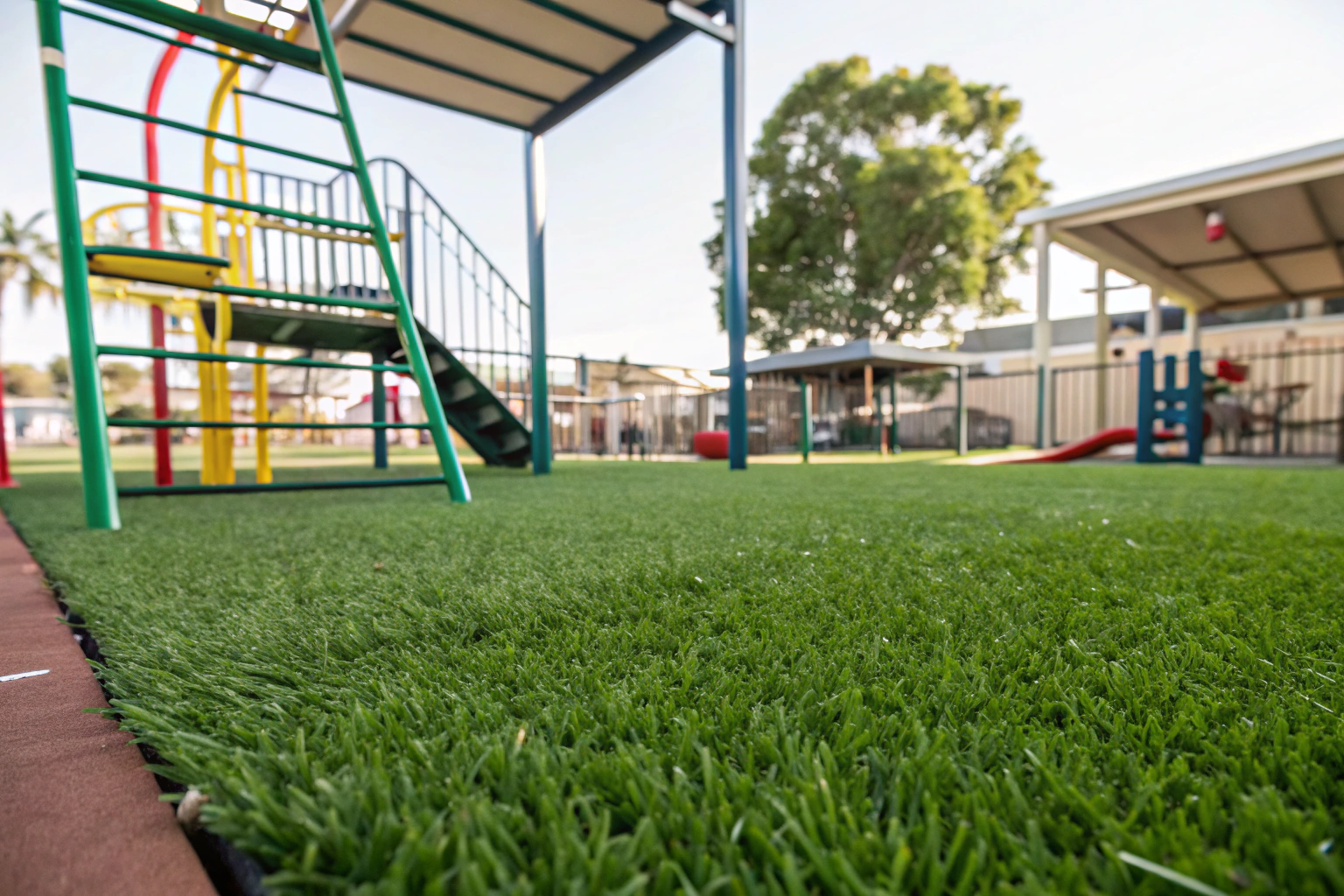
Soft fall synthetic grass is a two-component safety surfacing system. It combines a synthetic turf surface layer with an impact-attenuating underpad beneath it. Together, these two components work as a system to achieve a certified critical fall height (CFH) rating under AS 4422 — the Australian Standard for playground surfacing.
The CFH rating is the core concept here. It defines the maximum height from which a child could fall without sustaining a life-threatening head injury. Every piece of play equipment carries a CFH requirement, and the surface system beneath it must be specified to meet or exceed that rating.
This is what separates soft fall synthetic grass from standard turf. It’s not about appearance or how it feels underfoot — it’s about compliance performance.
Key advantages of a certified soft fall synthetic grass system:
- AS 4422 compliant — meets the Australian Standard for playground surfacing
- Certified CFH rating — system tested and documented to a specific fall height
- All-weather usability — drains effectively and remains safe for use after rain
- Low maintenance — no topping up, levelling, or displacement like loose-fill alternatives
- Hygiene advantages — no organic debris, easier to inspect, resists bacteria build-up

Why Soft Fall Synthetic Grass Is a Compliance Purchase, Not a Turf Purchase
When people choose standard synthetic turf, they’re making decisions about aesthetics, pile height, colour, and how much maintenance they want to deal with. Those are reasonable things to weigh up. Soft fall synthetic grass is a different conversation entirely.
If there is play equipment on a site — a swing set, a climbing frame, a slide — the surface beneath it is not a product preference. It’s a regulatory obligation. AS 4422 sets out exactly what that surface must achieve, and the installation must meet a certified critical fall height rating to be compliant. That applies to schools, childcare centres, and council playgrounds without exception. It applies to residential installations too, and more parents are recognising that every year.
Choosing the wrong surface doesn’t just mean a product that underperforms. It means a surface that is non-compliant — and in the event of a serious injury, that distinction carries real consequences. This is a compliance purchase first. The quality of the turf is secondary to whether the system meets the standard.
How a Soft Fall Synthetic Grass System Works
A compliant soft fall system is two components working together. Understanding what each one does makes it easier to see why specification matters as much as installation.
The Surface Layer
The synthetic turf in a soft fall system is selected differently to standard turf. Pile height, blade structure, and backing are all considered in the context of safety surface performance. The surface layer provides a durable, consistent, all-weather finish — but it’s not where the compliance performance comes from.
The Impact-Attenuating Underpad
The underpad is the compliance-critical component. It absorbs the energy of a fall and determines whether the system hits the required CFH rating. Underpad thickness and density are specified based on the equipment on site. Without the correct underpad, the surface won’t meet AS 4422 — full stop.
Why System Specification Matters
We specify both components together as a complete system — matched to the CFH requirements of your specific site and equipment.
Testing, Certification, and Project Documentation
A compliant soft fall system comes with paperwork — and that paperwork matters as much as the installation itself.
When a soft fall system is tested to AS 4422, it produces a document that confirms the CFH rating the system achieves. For schools, childcare centres, and council playgrounds, this documentation is not optional. It’s required for insurance, audits, and compliance records. Without it, there’s no way to verify the surface meets the standard — regardless of what was installed.
We provide full project documentation on completion of every job. That means the certified CFH rating, the system components used, and the test data that backs it all up. Where a project needs it, we’ll liaise directly with equipment suppliers, landscape architects, and council representatives to make sure everything lines up.
If compliance documentation is part of your handover requirements, we’re ready for that conversation from day one.
Residential Soft Fall Applications
Soft fall synthetic grass isn’t just for schools and council playgrounds. More Central Coast families are specifying compliant soft fall surfaces for their own backyards — and for good reason.
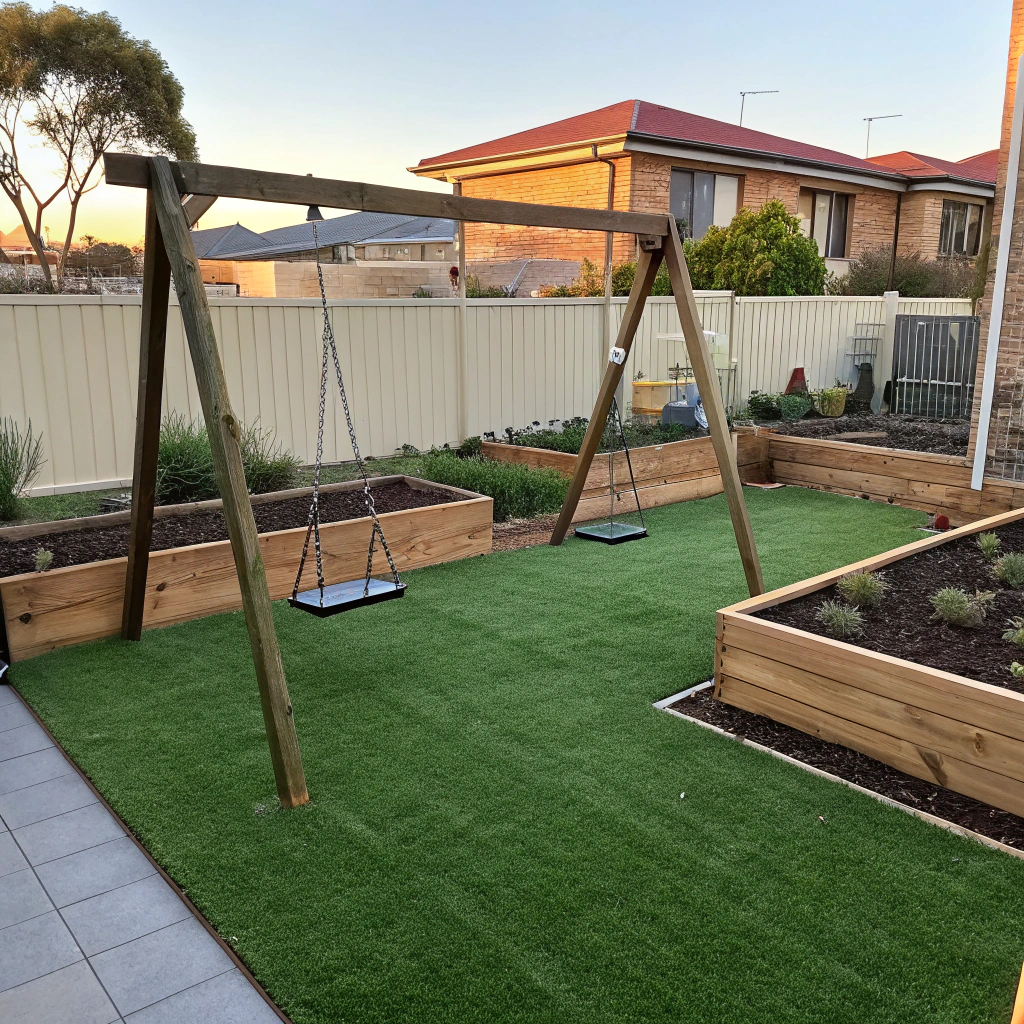
Backyard Play Equipment and Swing Sets: Parents investing in backyard play equipment want to know the surface beneath it will actually perform if something goes wrong. We specify every residential soft fall installation around the equipment in use — the height of the equipment determines the CFH requirement, and that drives the system specification.
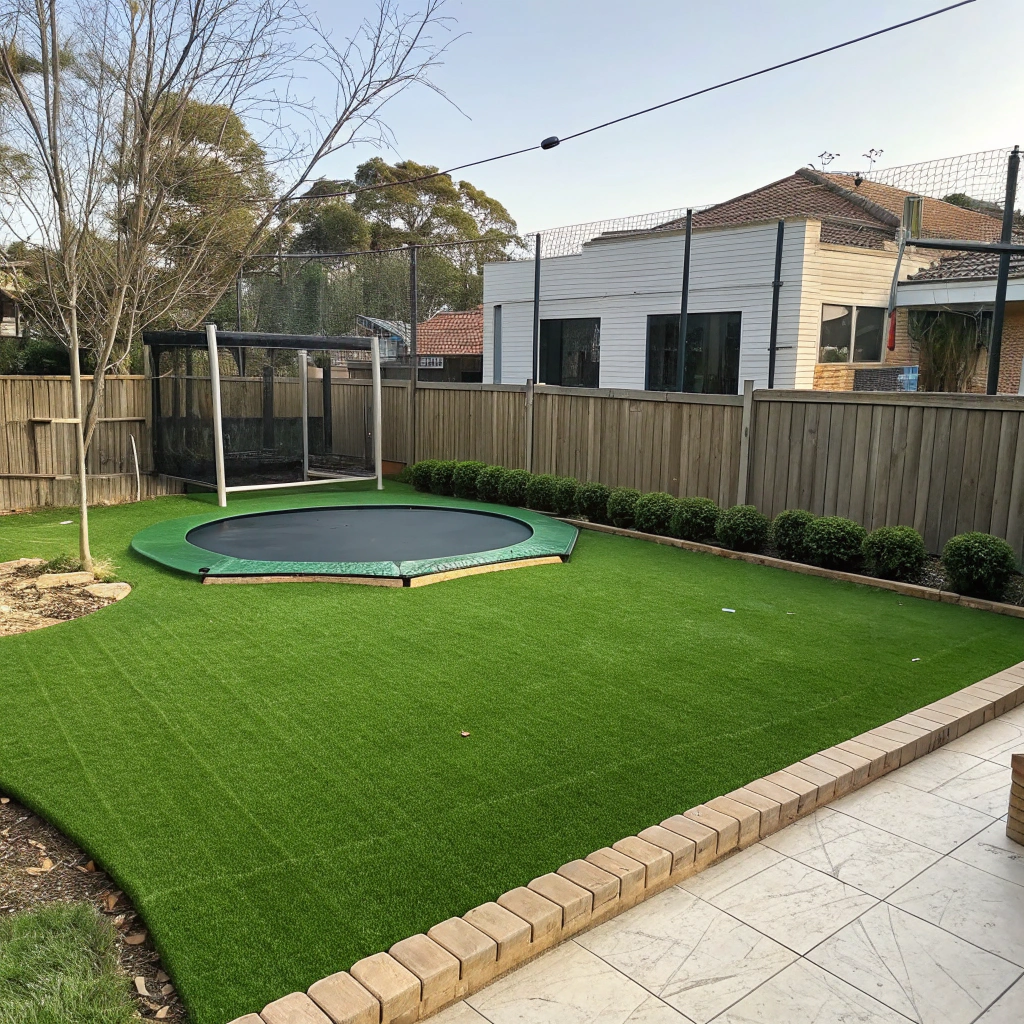
Climbing Frames, Trampolines, and Cubby House Surrounds: Each equipment type carries its own CFH requirement. Trampolines have fall zone requirements that extend beyond the perimeter — the compliant surface area is larger than most people expect. Every residential project is scoped around the specific equipment on site, not a generic solution.
Commercial and Institutional Applications
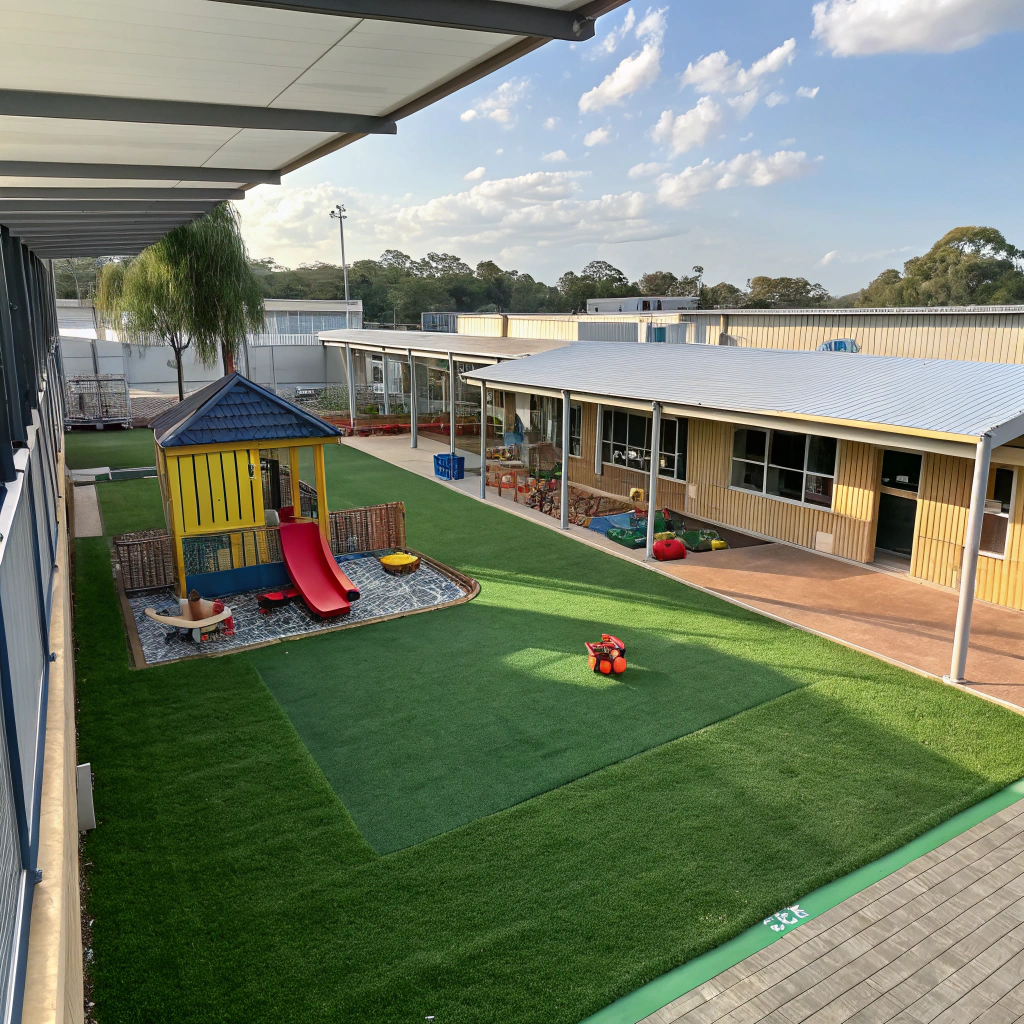
Schools, childcare centres, and council facilities across the Central Coast carry formal compliance obligations for playground surfacing. We work across all three and understand what each one requires.
Schools and Childcare Centres: Multi-equipment playgrounds need each zone specified correctly — every piece of equipment carries its own CFH requirement. We map each item, specify the right underpad for each area, and deliver a fully compliant surface across the entire playground. We work directly with facility managers, principals, and compliance officers to make sure documentation is ready for handover.
Council Playgrounds and Community Facilities: Council-managed playgrounds across the Central Coast — Gosford, Wyong, Tuggerah, The Entrance, Umina Beach, Terrigal, Woy Woy — carry the same compliance obligations with the added layer of public liability. We approach every council project with full documentation from the outset and liaise directly with council representatives from site assessment through to certified handover.
All-Weather Performance, Hygiene, and Long-Term Durability
Compliance is the primary reason to choose soft fall synthetic grass — but the operational advantages over loose-fill alternatives are worth knowing.
All-Weather Usability vs Loose-Fill Alternatives: Synthetic soft fall drains effectively and stays usable shortly after rain. It doesn’t scatter, displace, or compact under heavy use the way wood chips, rubber mulch, and sand do. For schools and childcare centres, a surface that’s ready in all conditions makes a real difference.
Hygiene Advantages: Synthetic soft fall doesn’t harbour the organic debris and dust that come with wood chip and sand surfaces. Easy to inspect, straightforward to clean, and resistant to bacteria build-up — it’s a genuine hygiene advantage for childcare and school settings.
Durability and Compliance Over Time: We use UV-stable turf and resilient underpad materials that resist compression over time. For high-use installations, we recommend periodic compliance re-testing to confirm the surface continues to meet AS 4422 as it ages.
Frequently Asked Questions
Standard synthetic turf doesn’t meet AS 4422 requirements for playground surfacing. If there’s play equipment involved, the surface needs to be a certified soft fall system — not standard turf. We can assess your existing installation and advise on what’s required to bring it up to standard.
It’s the maximum height from which a child can fall without sustaining a life-threatening head injury. Every piece of play equipment has one, and the surface beneath it must be specified to match or exceed it. We base every system we install on the CFH rating of the equipment on site.
When correctly specified and installed, yes. The system — turf and underpad together — is tested and certified to AS 4422. We provide full documentation confirming the CFH rating achieved on every project we complete.
That depends entirely on the CFH requirement of your equipment. Higher equipment needs a thicker, denser underpad. We determine the correct specification during our site assessment — there’s no single answer that applies to every installation.
Yes, always. Every project we complete comes with full documentation — the certified CFH rating, system components used, and the test data that supports the compliance claim. For schools, childcare centres, and council facilities, this documentation is a standard part of our handover process.
Yes, and it’s something we do regularly. Trampolines have specific fall zone requirements that extend beyond the trampoline perimeter, so the compliant surface area is larger than most people expect. We scope every trampoline installation around those requirements.
It outperforms loose-fill alternatives on almost every measure. It drains effectively, stays usable after rain, doesn’t scatter or displace under use, is easier to keep clean, and comes with a certified compliance rating. For schools and childcare centres especially, the operational advantages are significant.
With quality materials and proper installation, a well-specified system will perform for many years. We use UV-stable turf and resilient underpad materials that hold up under heavy use. For high-use installations, we recommend periodic compliance re-testing to confirm the surface continues to meet AS 4422 over time.
Get a Free Site Assessment
If there’s play equipment on your site — residential or commercial — the surface beneath it needs to be right. We’ll come to you, map your equipment’s critical fall height requirements, specify the correct system, and provide a written quote with full supporting documentation. No guesswork, no generic solutions.
Synthetic Grass Central Coast Experts 📞 02 4019 2019 Serving the Central Coast — Gosford, Wyong, Tuggerah, The Entrance, Umina Beach, Terrigal, and Woy Woy.
Here’s how it works:
- Book your free site assessment
- Receive your compliance specification and written quote
- Certified installation with full project documentation
