

Understanding Putting Green Turf as a Product Category
Putting green turf is a purpose-built synthetic surface engineered for golf performance. It belongs to the wider synthetic grass family, yet it sits apart from every other product in that family — landscape turf, sports turf, pet turf, playground turf. Each of those products is designed around a different end use. Putting green turf is designed around one thing only: the roll of a golf ball across a flat, firm, consistent surface.
The category is defined by a specific set of product attributes that work together. Short pile height keeps the surface low enough for true ball roll. High pile density removes the irregularities that would deflect a putt. Nylon-based fibre construction delivers the resilience the surface needs to recover shot after shot. Specification-tested ball roll speed gives the buyer a measurable performance number to select against.
Strip any one of those attributes out, and the product moves into a different category. Together, they define what a genuine putting green turf is.

What Makes Putting Green Turf a Specialist Product
Very Short Pile Height
Pile height on a genuine putting green sits between 10 and 15 millimetres. That short, tight cut lets the ball roll freely and consistently across the surface, the way it would on a maintained natural green. Anything taller and the ball drags, hops, or slows unpredictably across the line.
High Pile Density
A firm, even playing surface depends on density. High pile density removes the gaps, thin patches, and irregularities that would otherwise deflect the ball roll mid-putt. Density is what gives a green its body and what holds the line true from the moment the putter face strikes to the cup.
Nylon or Nylon-Blend Fibre Construction
Nylon and nylon-blend fibres deliver the resilience and recovery characteristics golf demands. The pile springs back after foot traffic, after a ball lands on it, after a wedge digs in on a chip shot. Lesser fibre types flatten quickly and lose their performance within a single playing season.
Specific Ball Roll Speed Ratings
Genuine putting green turf carries measured ball roll speed ratings on its specification sheet. Buyers select a surface matched to a target green speed — fast, medium, or slow — based on the conditions they want to replicate. The rating is repeatable, manufacturer-tested, and built into the product itself.
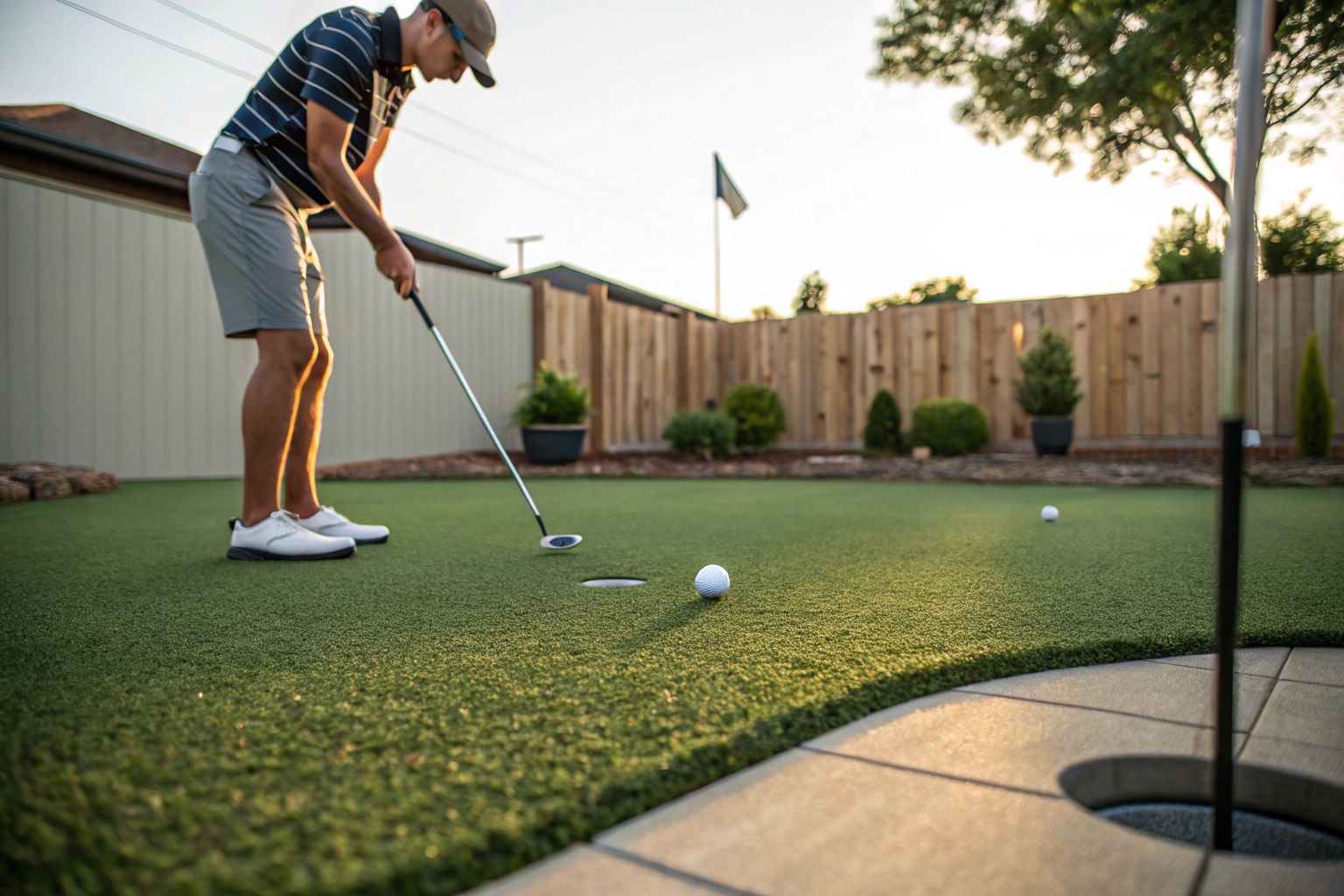
Selecting a Green Speed That Matches Your Practice Goals
Green speed selection is where putting green turf supply gets personal. The right surface for one buyer is the wrong surface for another, and the deciding factor is what the green is being built to do.
A golfer who plays a home course with quick, well-maintained greens wants a practice surface that matches what they face on the weekend. A faster turf with a higher stimpmeter rating replicates those conditions and builds putting stroke at the speed the real round demands.
A buyer practising touch and feel — lag putting, distance control, breaking putts — often benefits from a medium-speed surface that rewards a smoother, more deliberate stroke. A green that runs too fast can mask weaknesses rather than expose them.
Family backyard greens, where kids and casual players take turns, sit comfortably at the slower end of the range. The roll stays controlled, putts hold their line at a gentle pace, and the surface plays fairly across a wide skill spread.
Pile Height and Density Specifications for Genuine Putting Surfaces
Pile height and pile density are the two specifications that define how a putting green turf actually performs. Both numbers appear on every credible product specification sheet, and both directly shape the experience of every putt rolled across the surface. Buyers who understand these figures select better products every time.
Pile height on a genuine putting green falls within a tight band:
- 10 millimetres for the fastest, tournament-style rolling surfaces
- 12 to 13 millimetres for balanced residential and practice green applications
- 15 millimetres as the upper limit before ball roll quality begins to degrade
Pile density is measured in stitches per square metre, and the figure climbs well above what general landscaping turf carries:
- High-density commercial-grade putting turf for resort and hospitality greens
- Mid-density residential putting turf for backyard greens and practice setups
- Reinforced backing systems to hold the pile upright and stable under repeated foot traffic
Read together, these two specifications tell the buyer exactly how the green will roll, how it will hold up over time, and how closely it will mimic the conditions of a maintained natural surface.
Ball Roll Performance and Stimpmeter Speed Ratings
Ball roll performance is the single specification that separates one putting green turf product from another for a buyer who actually plays golf. The industry measures it the same way the natural turf world does — with the stimpmeter, the standard tool used on golf courses around the world to rate green speed in feet of roll.
A putting green turf rated at 9 or 10 on the stimpmeter rolls at a pace similar to a standard maintained course green. A surface rated at 11 or 12 plays faster, closer to tournament conditions, and demands a softer stroke and finer touch. Lower ratings sit in the 7 to 8 range and suit casual practice or family use, where slower roll keeps putts honest.
Pile height and density both influence the rating. Shorter pile and tighter density produce faster ball roll. The numbers on the spec sheet are tested, repeatable, and the most reliable guide a buyer has when comparing products side by side.
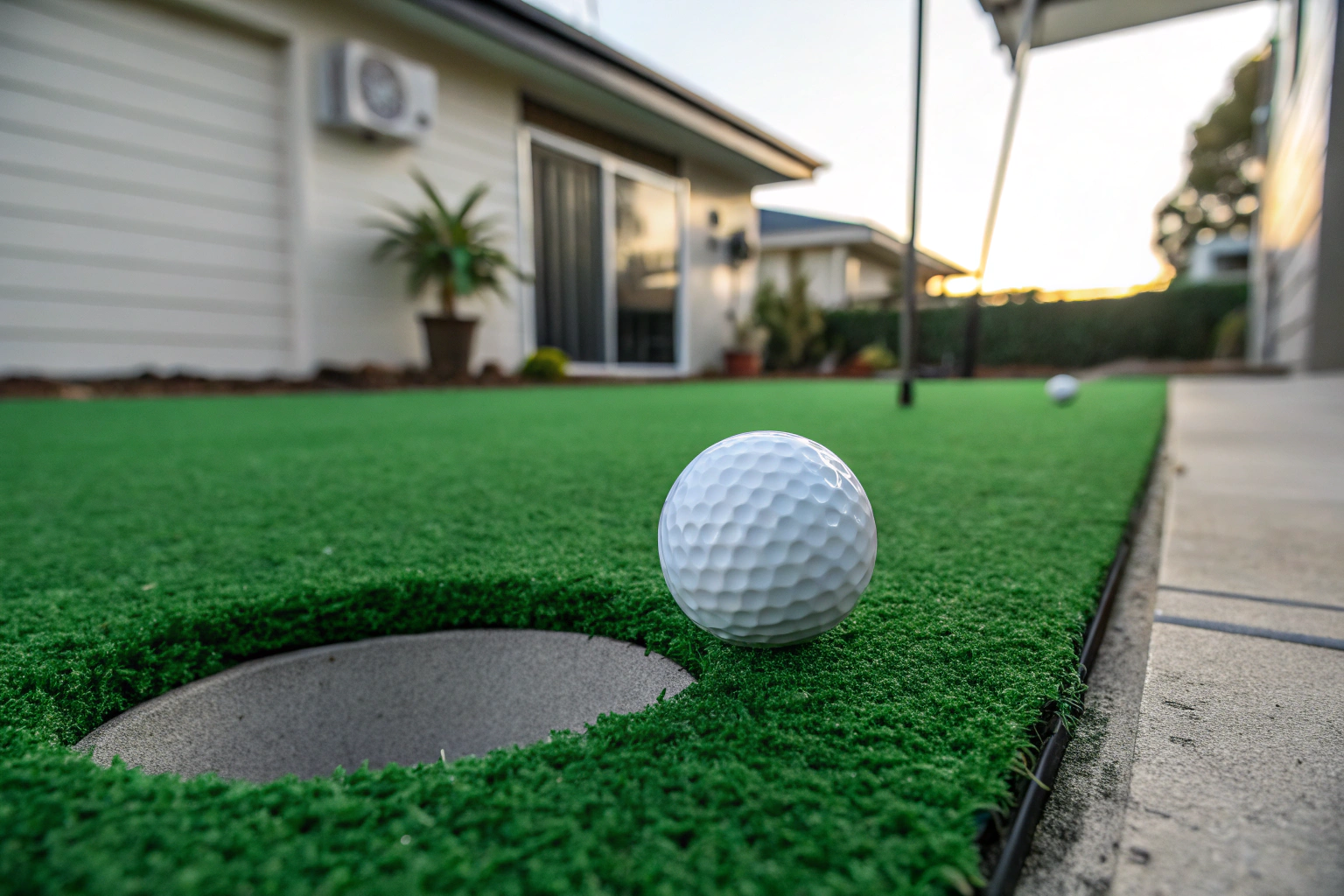
⛳ Reordering and Colour-Matched Top-Ups for Existing Greens
Reordering matters more in putting green turf than in almost any other synthetic grass product. A green that gets extended, repaired, or expanded years after the original installation needs new material that blends seamlessly with the existing surface — same pile height, same density, same fibre colour, same ball roll behaviour.
Manufacturers produce putting green turf in batch runs, and slight colour variations between batches are normal. A knowledgeable local supplier records the original product specification, batch reference where available, and supply date for every putting green order. When a top-up roll is needed, the match goes back to the source rather than the nearest visual approximation on the shelf.
For greens supplied years earlier, the supplier can also recommend the closest current-production equivalent when the original batch is no longer available, with a sample sent out for side-by-side comparison before the order is confirmed.
Backing Systems and Drainage Perforation on Supplied Rolls
Backing and drainage are the parts of a putting green turf roll that the buyer rarely sees on the showroom floor, yet they decide how the surface performs once it is laid down and played on. Every roll supplied for a putting green application carries a backing system built for the specific demands of golf surfaces — repeated foot traffic, ball impact, and outdoor exposure across years of use.
The backing itself is a dual-layer construction. A primary woven layer locks the pile fibres in place, and a secondary polyurethane or latex coating bonds the whole system together for dimensional stability. The result is a roll that holds its shape, stays flat across the green, and resists the stretching or rippling that ruins ball roll over time.
Drainage perforation runs through the backing at regular intervals across the full width of the roll:
- Rapid surface drainage that clears rainfall without pooling on the green
- Perforation density matched to high-rainfall coastal conditions
- Flow rates rated in litres per square metre per minute on the product specification sheet for buyer comparison
Frequently Asked Questions
Genuine putting green turf sits between 10 and 15 millimetres in pile height. Shorter pile produces faster ball roll and tournament-style green speeds, while slightly longer pile suits residential greens where controlled, family-friendly putting pace matters more than raw speed.
Putting green turf carries short pile, high density, nylon fibre, and tested ball roll ratings. Standard synthetic grass uses taller pile and softer fibres designed for appearance and underfoot comfort, not for the precise ball roll behaviour golf demands across the surface.
Yes. Putting green turf is supplied in standard roll widths and cut to length against the buyer’s measurements. Cut-to-size supply suits custom shaped greens and helps keep premium product waste to a minimum across the order.
A stimpmeter rating between 9 and 10 suits most backyard greens. The pace mirrors a standard maintained course green — fast enough to feel realistic, controlled enough to keep putts honest for golfers of mixed skill levels in the family.
Yes. Fringe turf carries a slightly longer pile and frames the green to recreate the natural transition zone for approach shots and chip shots. The fringe is supplied alongside the putting surface for a complete, properly finished installation.
A complete green typically includes cup and hole insert sets, flag and pin sets, silica sand infill for surface firmness, and joining materials for multi-section greens. The full accessory range is supplied alongside the turf for a one-source build.
Request a Putting Green Turf Quote or Trade Account
Putting green turf supply on the Central Coast comes down to product, advice, and the right next step for the buyer in front of us. Whether the green is a backyard practice surface, a resort amenity, or a trade-supplied project for a landscaping client, the conversation starts the same way — with the specification that fits the job.
Book a sample viewing to see pile height, density, and colour side by side before the order is placed. Request a cut-to-size quote with measurements in hand for a fast, accurate price. Open a trade account for ongoing landscaper and commercial supply with trade pricing and priority stock access.
Call the team or submit an enquiry online to get started.
